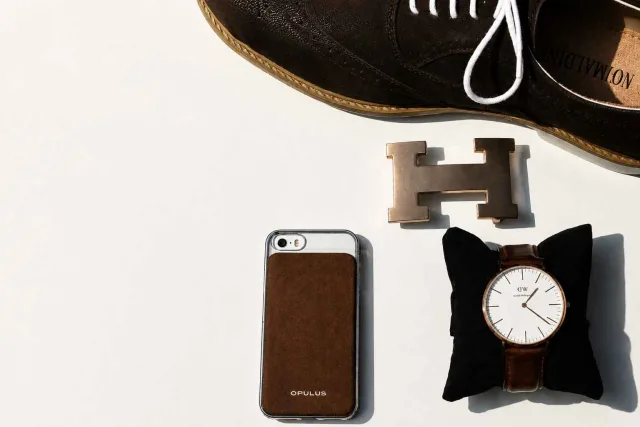

There is a strange assumption in men's style that looking expensive requires buying expensive clothes.
It doesn't.
We've all seen someone wearing hundreds, perhaps thousands, of pounds worth of clothing who somehow still doesn't look particularly well dressed. We've also seen the opposite: someone in a simple shirt, chinos and loafers who looks like he's spent considerably more than he actually has.
The difference usually isn't the label inside the clothes.
It's everything else.
Fit, colour, fabric, condition and the way individual pieces work together have far more influence over an outfit than the price on the receipt.
If you'd rather spend intelligently than spend heavily, these are the details worth getting right.
1. Get the Fit Right Before Anything Else
If there's one rule worth remembering, it's this: fit beats price.
A £30 shirt that fits your shoulders properly will almost always look better than a £200 shirt that's too large.
Pay particular attention to shoulders, sleeves and trouser length.
A shirt's shoulder seam should sit roughly where your shoulder ends. Sleeves shouldn't swallow your hands. Trousers shouldn't gather into a large pile of fabric above your shoes.
Don't automatically reject something because one small measurement isn't perfect either.
A local alterations shop can shorten trousers or sleeves surprisingly cheaply. Spending £15 improving a £40 pair of trousers can produce a better result than replacing them with a £100 pair.
2. Stop Buying Everything Too Tight
Good fit doesn't mean squeezing yourself into the smallest size possible.
Clothing should follow your shape without clinging to every part of your body.
There should be enough room for fabric to fall naturally.
This is particularly important with shirts and trousers. Pulling around buttons, pockets opening at the sides and fabric stretching across the thighs all make clothing look cheaper.
If you're between sizes, try the larger one and concentrate on the silhouette rather than the number printed on the label.
3. Build Around Expensive-Looking Colours
Colour is one of the easiest ways to make an affordable wardrobe feel more considered.
Navy, charcoal, cream, olive, brown, white and stone have remained menswear staples for decades for good reason.
They work together incredibly easily.
Try a navy Oxford shirt with stone chinos and brown loafers. Or an olive overshirt over a white T-shirt with dark denim.
Nothing about those combinations requires expensive clothing.
What makes them work is restraint.
Once you've built a neutral foundation, brighter colours become much easier to introduce without overwhelming the outfit.
4. Pay Attention to Fabric
Two garments can look almost identical online and completely different when you put them on.
Fabric is often the reason.
You don't need to become a textile expert, but learning to check the composition label is worthwhile.
Cotton Oxford cloth, linen, merino wool, lambswool and good quality denim tend to age gracefully and develop character.
Natural fibres aren't automatically superior and blends can be extremely practical, but be wary of very thin, shiny fabrics when you're trying to create a more refined appearance.
Texture can also make simple outfits much more interesting.
A knitted polo, suede loafer or Oxford-weave shirt adds depth without needing loud patterns or branding.
5. Keep Your Clothes Looking Looked After
You can buy the perfect wardrobe and ruin the effect surprisingly quickly.
A creased shirt, dirty trainers and a jumper covered in bobbles will make expensive clothing look cheap.
Fortunately, the reverse is also true.
A clothes steamer is one of the most useful things you can own. A fabric shaver can rescue tired knitwear. A decent shoe brush and some polish can transform leather shoes in minutes.
And clean your white trainers.
It sounds ridiculously basic because it is. It also makes an enormous difference.
6. Avoid Huge Logos
There's nothing inherently wrong with branding, but a giant logo rarely makes an outfit look more sophisticated.
Quite often it does the opposite.
When you're shopping on a sensible budget, simple clothing can actually be an advantage.
A plain navy crew neck doesn't tell anyone whether you spent £30 or £300 on it.
Let fit, fabric and styling do the talking instead.
7. Upgrade the Shoes
If you're deciding where to put a little more of your budget, footwear is a sensible place.
Shoes anchor an outfit.
A basic pair of chinos and an Oxford shirt can look noticeably smarter when finished with good brown suede loafers or clean leather trainers.
You still don't need designer footwear.
Look for classic shapes, restrained branding and colours that work with several pairs of trousers.
Brown is particularly useful because it complements navy, beige, olive, grey and denim.
8. Use Accessories Sparingly
Accessories should finish an outfit rather than become the outfit.
A simple watch, leather belt and good pair of sunglasses are enough for most men.
The trick is consistency.
If you're wearing brown leather shoes, a similarly toned belt creates a subtle connection. It doesn't need to be an exact colour match.
Likewise, a clean stainless steel watch works with almost everything and doesn't need to cost a fortune.
One or two considered details generally look better than wearing every accessory you own simultaneously.
9. Dress Like You Meant It
This might be the most important point of all.
The best outfits look intentional.
That doesn't mean formal.
A white T-shirt, dark jeans and trainers can look excellent when everything fits properly, the trainers are clean and the jeans are the right length.
Before leaving the house, look at the entire outfit rather than individual pieces.
Does something look noticeably too big?
Are there too many colours competing with one another?
Would changing the shoes improve it?
Does the jacket actually work with the trousers?
These tiny decisions cost absolutely nothing.
Where Should You Actually Spend More?
Saving money doesn't mean automatically buying the cheapest version of everything.
The better question is how often you're going to use something.
If you'll wear a coat 100 times, spending more for better construction makes sense. The same applies to shoes, everyday bags and frequently worn knitwear.
Something you'll wear twice a year probably doesn't deserve the same proportion of your budget.
Think in terms of cost per wear rather than the initial price.
A £100 jacket worn 100 times costs £1 per wear. A £30 shirt worn once because you never really liked it cost you £30 per wear.
The supposedly cheaper purchase wasn't cheaper at all.
Looking Good Isn't About Looking Rich
There's an important distinction here.
The goal isn't to convince people you're wearing expensive clothing.
It's to understand why good clothing looks good in the first place.
Once you remove branding and price tags from the equation, you're left with proportion, colour, texture, condition and fit.
Those are things anyone can improve.
Start with the clothes you already own. Get your best trousers altered. Steam your shirts. Clean your shoes. Remove the bobbles from your favourite jumper. Experiment with combinations you haven't tried before.
You might discover your wardrobe doesn't need replacing at all.
It simply needs looking after and wearing better.
For more practical advice on building a timeless wardrobe without spending a fortune, explore more style guides and recommended products here on Cock Your Hat.