What Exactly Is An Overshirt?
You’ve heard of shirts, and you’ve heard of jackets. But what about that versatile garment that sits comfortably somewhere in between? That, my friend, is the overshirt. It’s thicker than a typical shirt, often made from more substantial fabrics, and designed to be worn either as a light outer layer or as a heavier shirt.
Think of it as the Swiss Army knife of your wardrobe. It’s got the relaxed appeal of a shirt but with the added warmth and structure of a jacket, making it incredibly useful for those tricky in-between seasons or when you need a casual layering piece.
Why Every Man Needs An Overshirt
The overshirt isn't just a trend; it's a timeless piece of practical menswear that deserves a place in your wardrobe. Here’s why:
- Unbeatable Versatility: It bridges the gap between casual and smart-casual with ease. You can throw it over a tee for a relaxed look or layer it with a smarter shirt for something more polished.
- Perfect for Transitional Weather: Those unpredictable spring and autumn days when it's too warm for a heavy coat but too cool for just a t-shirt? That’s where the overshirt shines. It offers just the right amount of warmth without bulk.
- Effortless Layering: It’s designed to be layered. Wear it open, button it up, or even wear it under a heavier coat when the temperature really drops. It adds depth and interest to any outfit.
- Adds Texture and Character: Often made from textured fabrics like cotton twill, corduroy, or wool blends, an overshirt can instantly elevate an otherwise simple outfit by adding visual interest.
- Practicality: Many overshirts come with useful patch pockets, adding a utilitarian touch that’s both stylish and functional.
Key Features To Look For When Buying An Overshirt
To get the most out of your overshirt, pay attention to these details:
Fabric Choices: Texture and Durability
- Cotton Twill: This is a classic choice. Durable, breathable, and holds its shape well. It's great for everyday wear and comes in a wide range of colours.
- Corduroy: Adds a fantastic texture and a touch of vintage cool. It's warmer than plain cotton and ideal for autumn and winter.
- Wool Blends: For extra warmth and a more refined look, wool or wool blends are excellent. They can lean slightly smarter and are perfect for colder weather.
- Denim: A rugged, casual option. Similar to a denim jacket but often softer and less structured, making it easier to layer.
The Importance of Fit
An overshirt should fit differently from a regular shirt or a tailored jacket. It needs to be comfortable enough to wear over a t-shirt or thin knitwear, but not so baggy that it looks shapeless. Here’s what to aim for:
- Shoulders: The shoulder seams should sit comfortably on your natural shoulder line, or just slightly beyond.
- Chest: You should have enough room to move freely, but it shouldn't billow.
- Length: It should typically end around mid-hip, slightly longer than a regular shirt but shorter than most jackets.
- Sleeves: The sleeves should be long enough to cover your wrists when your arms are relaxed, with enough room to roll them up if you wish.
A good fit is crucial for making affordable clothes look expensive and well put together.
How To Style Your Overshirt: Outfit Formulas That Work
The beauty of the overshirt lies in its adaptability. Here are some reliable ways to wear it:
1. Casual Cool: Open Over A T-Shirt
This is arguably the most common and easiest way to wear an overshirt. It’s perfect for relaxed weekends or casual outings.
- Base Layer: A simple crew-neck or V-neck t-shirt in white, grey, navy, or black. A neutral colour will work with almost any overshirt.
- Bottoms: Dark wash jeans, slim-fit chinos, or even cargo trousers.
- Footwear: Classic white trainers, canvas sneakers, desert boots, or work boots.
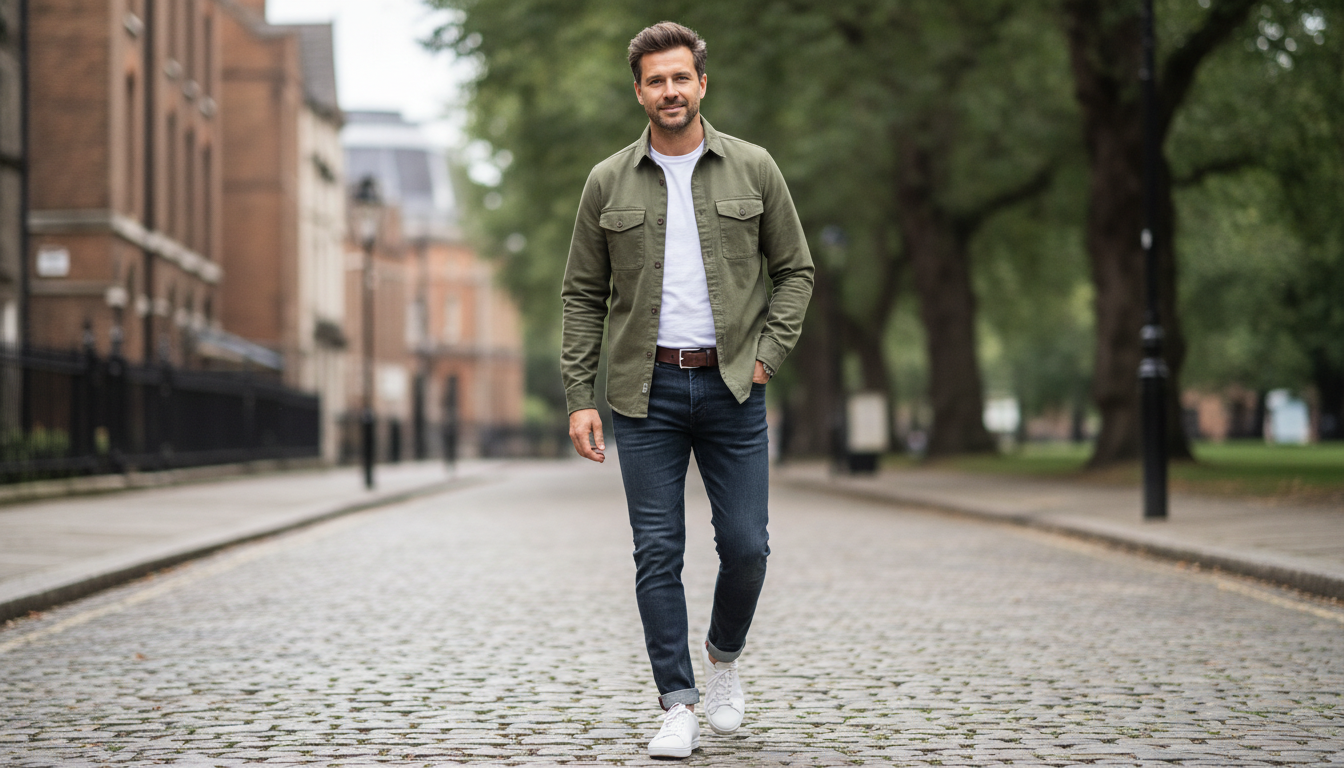
Outfit Idea: Olive cotton twill overshirt (open) + White t-shirt + Dark wash jeans + White trainers.
2. Smart-Casual Edge: Buttoned Up Or Over A Collared Shirt
Want to elevate your look slightly without reaching for a blazer? The overshirt can do the job.
- Base Layer: A fine-gauge merino wool knit, a plain long-sleeve t-shirt, or an Oxford button-down shirt.
- Bottoms: Chinos (beige, navy, grey), corduroy trousers, or even tailored trousers if the overshirt's fabric is refined enough (e.g., a wool blend).
- Footwear: Loafers, smart leather boots (like Chelsea boots), or clean, minimalist leather trainers.
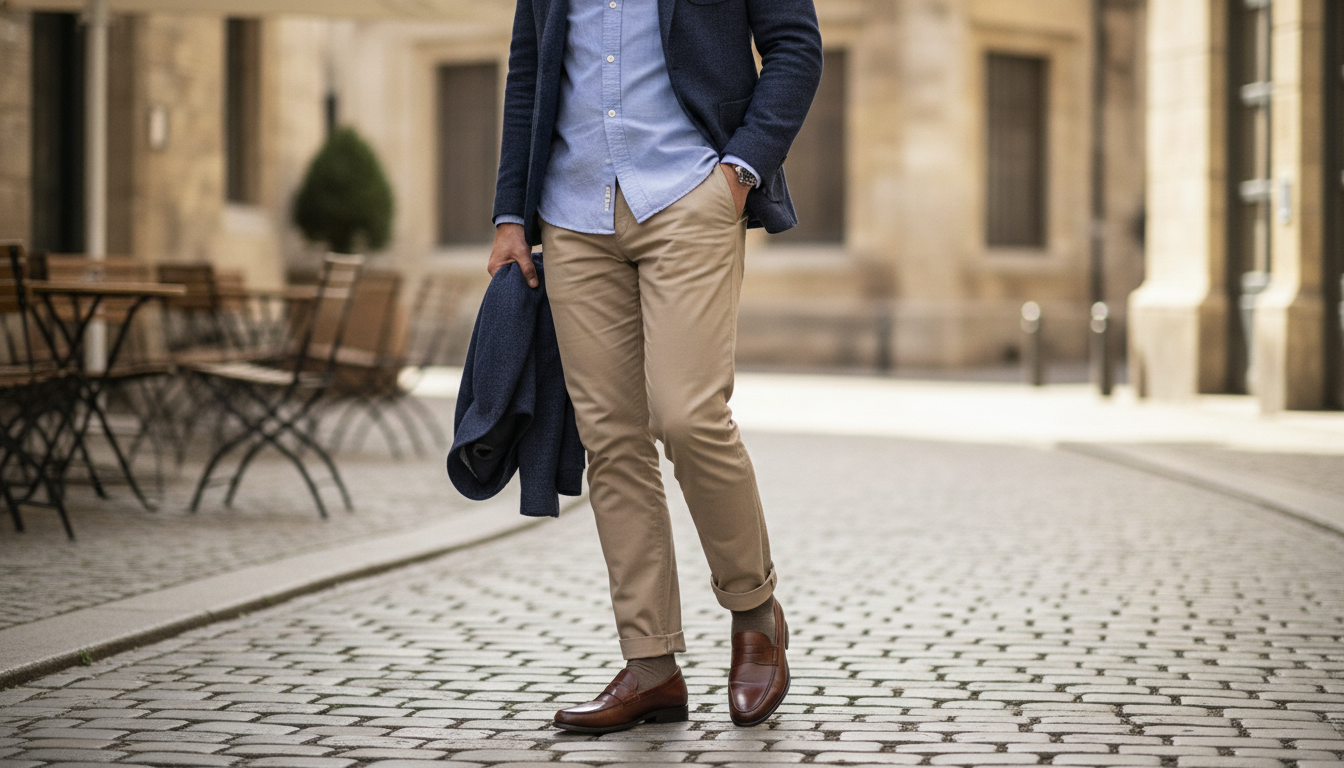
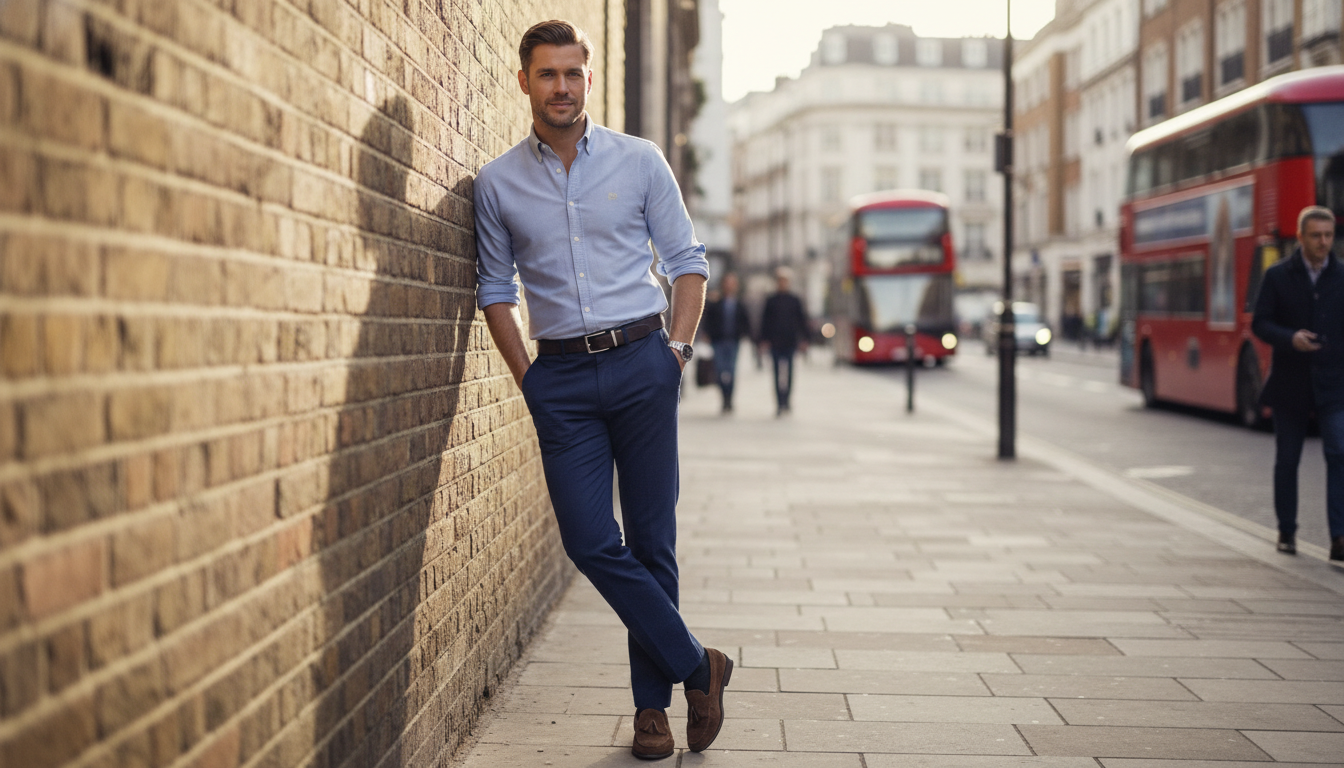
Outfit Idea: Navy wool-blend overshirt (buttoned) + Light blue Oxford shirt + Beige chinos + Brown loafers.
3. Layered For Warmth: Under A Heavier Coat
When the temperature really drops, your overshirt can act as an excellent mid-layer, adding both warmth and an extra dimension to your outfit.
- Outer Layer: A pea coat, a classic trench coat, or even a Harrington jacket (if the overshirt is thin enough).
- Base Layer: A t-shirt or thin knit.
- Bottoms & Footwear: Whatever suits the outer coat and the occasion – jeans with boots, or smarter trousers with dressier shoes.
Outfit Idea: Camel trench coat + Grey overshirt + Black roll-neck jumper + Charcoal trousers + Black Chelsea boots.
Colour Confidence: Choosing Your Overshirt Palette
When starting, stick to versatile, timeless colours:
- Navy: Always a winner. Works with almost everything.
- Olive Green: A fantastic earthy tone that pairs well with blues, greys, and browns.
- Beige/Stone: Light and airy, great for spring and summer layering.
- Charcoal Grey: A sophisticated alternative to black, very easy to style.
- Burgundy/Rust: Adds a touch of rich colour, especially in corduroy or wool.
These colours will integrate seamlessly into your existing wardrobe and help you build a versatile capsule wardrobe.
What To Avoid
- Overshirts that are too flimsy: If it feels like a regular shirt, it won't give you the structure or warmth you're looking for.
- Overshirts that are too tight: You won't be able to layer properly, defeating one of its main purposes.
- Overly complicated patterns: Keep it simple. The strength of the overshirt is its clean lines and texture.
- Forgetting about your belt: If you're wearing an overshirt open, your belt is on display. Make sure it complements your shoes and the rest of your outfit.
The Final Word
The overshirt is one of those understated heroes of men's style. It’s practical, versatile, and effortlessly cool. By investing in a couple of good quality options in classic colours, you’ll find yourself reaching for them again and again, transforming your outfits and making transitional dressing a breeze. It’s proof that dressing well doesn't have to be complicated or expensive; it just requires a few smart, versatile pieces.